Indoor Air Quality in Toronto High-Rises: A Property Manager’s Practical Guide
Published
By Modern Air Filtration
Start with the building, not the shopping list
An indoor air quality complaint in a Toronto high-rise rarely comes with a clear diagnosis. One resident reports a stuffy bedroom, another notices cooking smells near the elevator, and the superintendent finds a dirty corridor air-handler filter. Those observations may be connected, but changing a filter does not prove the underlying problem has been solved.
For condominium boards, rental apartment operators and property managers, the useful starting point is a simple question: where should air enter, how should it move, and where should it leave? A good programme combines source control, working ventilation, suitable filtration, moisture management and documented follow-up. Each addresses a different part of the problem.
Toronto’s cold winters, summer humidity, traffic exposure and occasional wildfire-smoke events create changing operating conditions. A waterfront tower, a building beside a major road and a sheltered mid-rise will not necessarily need the same adjustments. Use local conditions to plan inspections, not to assume a diagnosis.
Map the systems that residents actually use
Collect current mechanical drawings, balancing reports, equipment manuals and recent service records. Walk the building with the HVAC contractor and confirm which systems are still operating as shown. Renovations, fan replacements and changes to control schedules can make an old drawing misleading.
Many buildings have a combination of central corridor make-up air, in-suite fan coils or heat pumps, bathroom and kitchen exhaust, garage exhaust and separate amenity-space ventilation. Other buildings supply outdoor air directly to suites. A fan coil that recirculates suite air is not automatically a source of outdoor air. Replacing its filter cannot compensate for an outdoor-air supply problem.
| Area | What to establish | Useful record |
|---|---|---|
| Suites | Source of outdoor air, recirculating equipment and exhaust arrangements | Equipment type, filter dimensions and service responsibility |
| Corridors | Supply route, operating schedule and pressure relationships | Fan status, filter pressure drop and balancing report |
| Garage and loading area | Exhaust operation and separation from occupied spaces | Service records and controls inspection |
| Garbage and recycling rooms | Source containment and dedicated exhaust | Door condition, cleaning and exhaust observations |
| Amenities | Ventilation suited to actual occupancy and activities | Operating hours, maintenance and complaint history |
Confirm who is responsible for each task under the applicable leases, condominium documents and service contracts. A building-wide programme can fail when the central equipment is maintained but responsibility for suite access and filter replacement remains unclear.
Choose filtration without sacrificing airflow
MERV describes particle filtration performance; it is not a measure of outdoor-air delivery or gas removal. Health Canada’s office-building guidance recommends MERV 13 or higher where possible, with selection appropriate to the contaminants and ventilation system. That office guidance is useful background, not a universal requirement to fit the same filter into every residential fan coil.
Before upgrading, ask the contractor to check actual filter dimensions, available depth, face velocity, clean-filter resistance and the equipment’s allowable pressure drop. Verify airflow after installation. A higher-rated filter that fits badly or exceeds the fan’s available pressure can produce an unsatisfactory result.
Air bypass also matters. Look for missing retainers, gaps around frames, damaged seals and distorted media. A filter performs only on the air that passes through it. Do not stack filters or alter racks without an equipment-specific assessment.
For procurement, pleated air filters and media pads and rolls are different options for different equipment. Modern Air Filtration can help compare available sizes and media; the building’s HVAC professional should confirm compatibility and operating performance. Buying by nominal size and price alone leaves important questions unanswered.
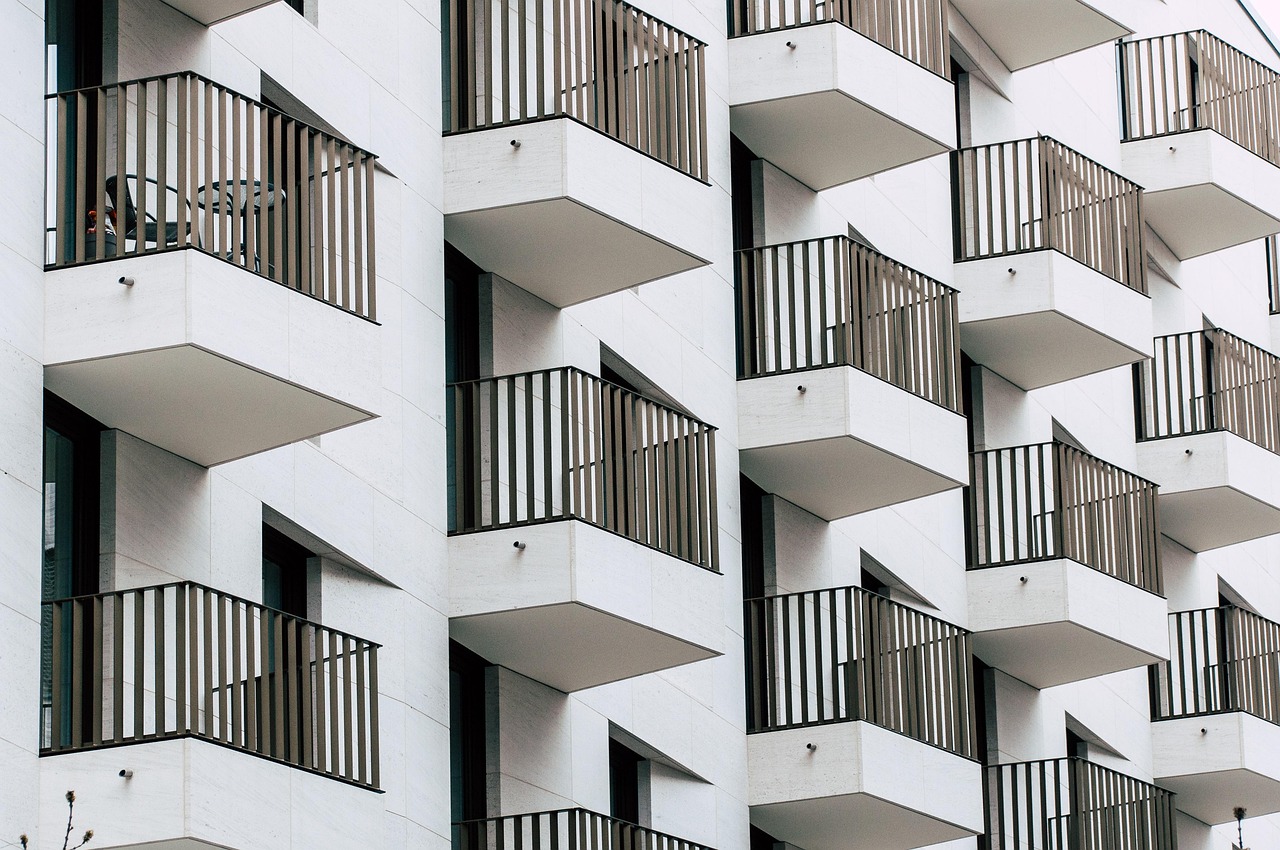
Illustrative site-library image. It is not a documented inspection of a named Toronto property.
Build a seasonal operating plan
In autumn, confirm heating-season schedules, inspect outdoor-air intakes and review recurring lower-floor draught complaints. Winter temperature differences can intensify stack effect and pressure problems, so record the weather when complaints occur.
Before cooling season, inspect condensate pans, drains, coils and accessible signs of water damage. A wet filter or persistently damp compartment needs a moisture investigation, not simply a fresh filter. During summer, review humidity trends and do not assume that bringing in more outdoor air is always beneficial without checking the equipment’s ability to condition it.
During poor outdoor-air events, follow a building-specific operating plan prepared with qualified professionals. Watch local air-quality information, check filtration and consider appropriately sized portable particle filtration where suitable. Do not shut off required ventilation or disable garage and life-safety systems as a generic smoke response. An outdoor AQHI reading is useful context, not a measurement of the air in a particular suite.
Use condition-based filter replacement
There is no reliable single replacement interval for every building. Outdoor dust, renovation work, operating hours, filter area and resident activities all affect loading. Use manufacturer guidance and site observations to set an initial inspection schedule, then refine it with evidence.
Record the installation date, product specification, observed condition and pressure drop where the system provides suitable measurement points. Track pressure drop under comparable operating conditions. A dirty-looking filter is not a complete performance test, and a calendar date does not establish remaining service life.
Where suites use small filters without differential-pressure measurement, follow the equipment manufacturer’s inspection guidance and document what staff find. Never run equipment without its specified filter to improve airflow. Investigate unexpectedly rapid loading instead of treating frequent replacements as normal.
Make resident complaints useful evidence
Provide one clear reporting route. Ask for the location, time, duration and description of the concern; whether windows or exhaust fans were operating; and whether it follows cleaning, cooking or nearby work. Avoid asking residents to diagnose the cause.
Inspect promptly and separate urgent conditions from routine comfort complaints. Suspected gas leaks, carbon monoxide alarms, visible smoke or severe breathing symptoms require the appropriate emergency response, not the ordinary maintenance queue. For recurring odours, use a source-and-airflow investigation. For health-related patterns, follow a structured indoor air quality response.
Keep health information confidential. A board report normally needs locations, trends, actions and unresolved risks—not identifiable medical details. Close the loop with residents after work and check whether the original concern returns under similar conditions.
Give the board an actionable report
A useful monthly summary separates completed tasks from verified outcomes. “Filters replaced” is an activity. “Airflow checked after replacement and corridor complaints reassessed” is evidence of follow-through.
Track overdue inspections, unresolved moisture sources, recurring complaint locations, filter specification changes and upcoming contractor recommendations. Explain uncertainties and the reason for any proposed expenditure. Avoid claiming a building is “healthy” solely because a low-cost sensor displays a green indicator.
Toronto’s published property-standards guidance states that ventilation systems must be regularly cleaned, kept in good repair and maintained in working condition. Confirm which municipal, provincial and condominium obligations apply to your property with the appropriate professionals; an online article is not a compliance assessment.
Questions property managers often ask
Does every condo fan coil need a MERV 13 filter?
No. Select the filter with reference to the equipment, available fan pressure, fit and verified airflow. The best specification for a central air handler may not suit a compact suite fan coil.
Will better filters solve a stuffy suite?
Not necessarily. Filters remove selected airborne particles; they do not supply outdoor air or remove occupant-generated carbon dioxide. Check ventilation and air distribution as well.
What should we send a filter supplier?
Provide actual dimensions, depth, equipment identification, the current specification, quantities and any available airflow or resistance data. If the specification is uncertain, obtain contractor input before ordering. A building filter enquiry can then focus on compatible options rather than guesswork.
Sources and scope
- Health Canada: Guidance on improving indoor air quality in office buildings — source control, ventilation, filtration and investigation practices. Its stated scope is non-residential workplaces; residential applications need building-specific assessment.
- City of Toronto: Housing Property Standards — local maintenance and ventilation guidance.
- National Research Council: Stack Effect in Buildings — foundational building-physics reference, not a current code or design specification.
This guide is educational, not engineering, medical or legal advice. Product links lead to Modern Air Filtration’s own catalogue; they are not independent endorsements or promises of a particular health outcome.